
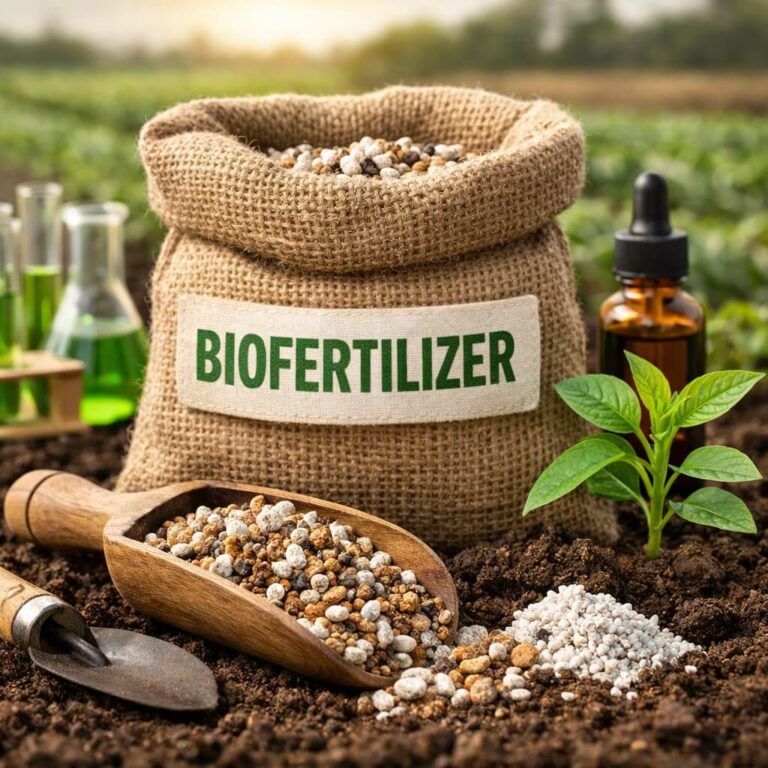
Biofertilizersare being recognized as a kind of silent revolution in agriculture. Instead of depending on costly chemical fertilizers that weaken the soil over time, farmers are discovering that biofertilizers offer a healthier, more affordable path. They not only cut down expenses but also bring life back to the soil, making farming more sustainable for the future.
The list below highlights some of the most widely adopted biofertilizers. In addition, ongoing research and farmer innovations continue to expand the range of options available.
Nitrogen-Fixing Biofertilizers
These biofertilizers contain microorganisms that convert atmospheric nitrogen into forms usable by plants, reducing dependence on chemical nitrogen fertilizers.
- Rhizobium (Legume crops – pulses, oilseeds)
- Azotobacter (Non-legumes – wheat, cotton, vegetables)
- Azospirillum (Cereals, sugarcane, millets)
- Acetobacter (Sugarcane)
- Blue-Green Algae (BGA) (Wetland rice cultivation)
- Azolla (Wetland rice cultivation)
Phosphorus-Solubilizing Biofertilizers
Phosphorus is often locked in insoluble forms in soil. These microbes release organic acids and enzymes that make phosphorus available to plants.
- Phosphate-Solubilizing Bacteria (PSB) – (Wheat, rice, pulses, oilseeds, vegetables)
- Phosphate-Solubilizing Fungi – (Cereals, pulses, vegetables)
- Vesicular Arbuscular Mycorrhiza (VAM) – (Fruit trees, tea, coffee, cereals, pulses, vegetables)
Potassium & Zinc Mobilizers
These biofertilizers release essential micronutrients trapped in soil minerals.
- Potassium Mobilizing Biofertilizer (KMB) – (Rice, wheat, maize, sugarcane, banana, potato, tomato)
- Zinc Solubilizing Biofertilizer (ZSB) – (Rice, wheat, pulses, vegetables, oilseeds, horticultural crops)
Sulfur-oxidizing bacteria
Help in mobilizing sulfur for oilseeds.
Iron-mobilizing microbes
Improve iron availability in calcareous soils.
Plant growth-promoting rhizobacteria (PGPR)
Multifunctional microbes that improve nutrient uptake, stress tolerance, and disease resistance.
Microbial consortia blends
customized mixes of bacteria, fungi, and algae tailored for specific crops or regions.
Liquid Consortia
- NPK Liquid Consortia – A mixture of nitrogen-, phosphorus-, and potassium-solubilizing bacteria that collectively improve soil fertility and crop productivity. (Mixed application for cereals, pulses, vegetables, oilseeds, and plantation crops).
Why The Above Biofertilizers Matter ?
- Restore soil fertility by replenishing microbial diversity.
- Reduce chemical input costs while maintaining yields.
- Promote sustainable agriculture by regenerating soil structure and nutrient cycles.
- Improve resilience of crops against drought and pests.
Summary
Biofertilizers are not just another agricultural product — they are nature’s own way of feeding crops and healing the soil. From nitrogen-fixing bacteria like Rhizobium and Azotobacter to phosphorus-releasing microbes like PSB and VAM fungi, each biofertilizer does a specific job that benefits both the crop and the soil beneath it.
Think of biofertilizers as a team of tiny workers living in the soil. Rhizobium helps pulses get nitrogen directly from the air. Azospirillum feeds wheat, maize, and millets the same way. Azolla and Blue-Green Algae quietly enrich flooded rice fields without any extra effort. PSB and VAM unlock the phosphorus already present in soil that plants cannot reach on their own. ZSB fixes zinc deficiency that silently reduces yields in rice and wheat fields every season. KMB releases potassium locked inside soil minerals, feeding crops like banana, potato, and sugarcane.
All of these microbes work together to do what expensive chemical fertilizers often cannot — they build the soil rather than deplete it.
For a farmer, the message is simple. Using biofertilizers means spending less money on chemicals, getting healthier soil every year, and growing crops that are stronger against drought and disease. The soil that was once tired and weak slowly becomes active and productive again.
Today, options range from simple single-microbe products to ready-to-use NPK Liquid Consortia that provide nitrogen, phosphorus, and potassium all in one application. Whether you farm cereals, vegetables, pulses, fruits, or plantation crops, there is a biofertilizer combination suited to your field and your crop.
The shift to biofertilizers does not happen overnight, but every season we use them, our soil gets better. And better soil always means better crops, lower costs, and a more secure future for our farm and our family.