
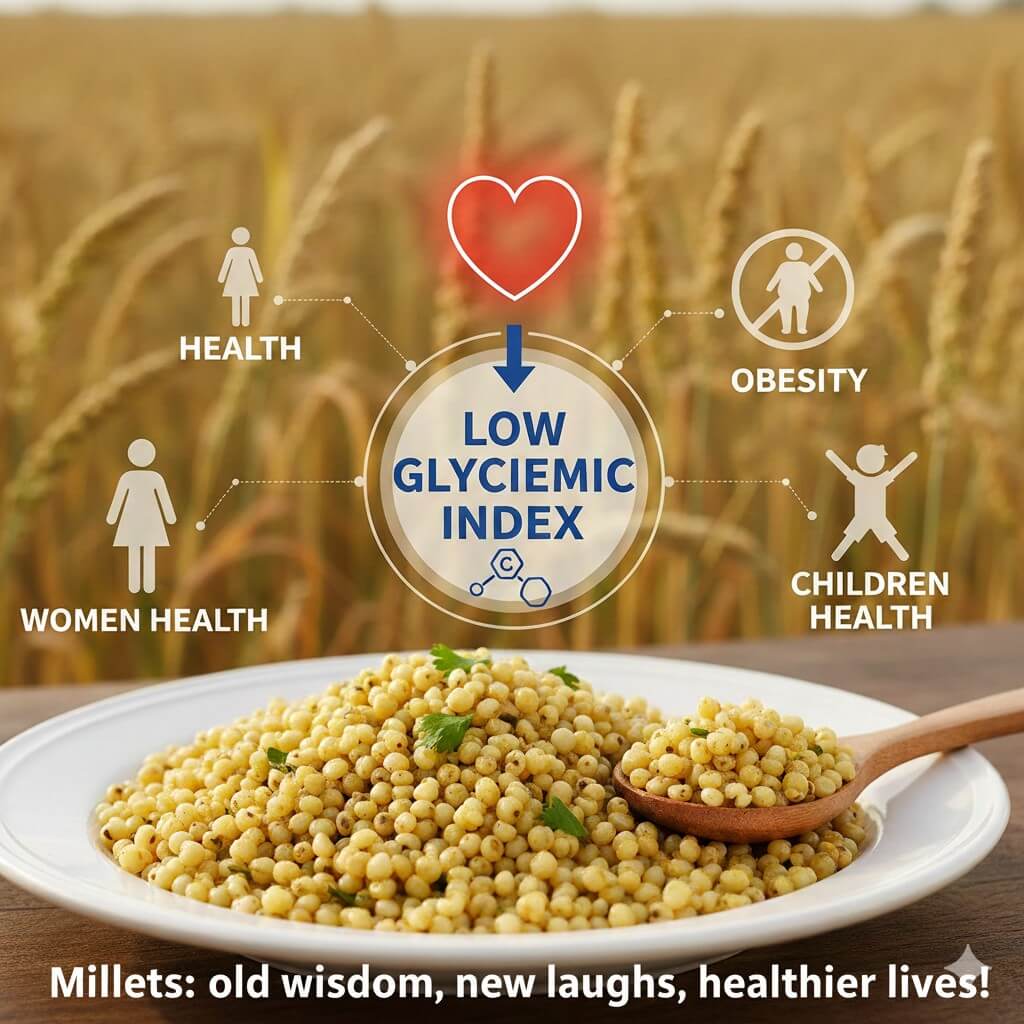
India’s food story today feels a bit confused. On one hand, millions of people still struggle with undernutrition. On the other, lifestyle diseases such as diabetes, obesity, and heart problems are rising faster than smartphone usage. According to health surveys, India is home to over 77 million diabetics, and nearly half of women of reproductive age suffer from anemia.
Ironically, this situation developed after a well-meaning solution. The Green Revolution made rice and wheat the staples of Indian kitchens. While these grains ensured calorie security, they slowly pushed out traditional grains that offered far greater nutritional value. The result? Full stomachs, but widening nutrient gaps.
Enter millets — the humble grains our grandparents trusted long before “superfoods” became trendy hashtags. Bajra (pearl millet), ragi (finger millet), jowar (sorghum), foxtail millet, little millet, kodo millet, and barnyard millet are now being rediscovered as nutritional heroes. Packed with micronutrients, balanced proteins, and unique health benefits, millets directly address India’s twin challenge: undernutrition and lifestyle diseases — without fancy packaging or foreign names.
What are Millets ?
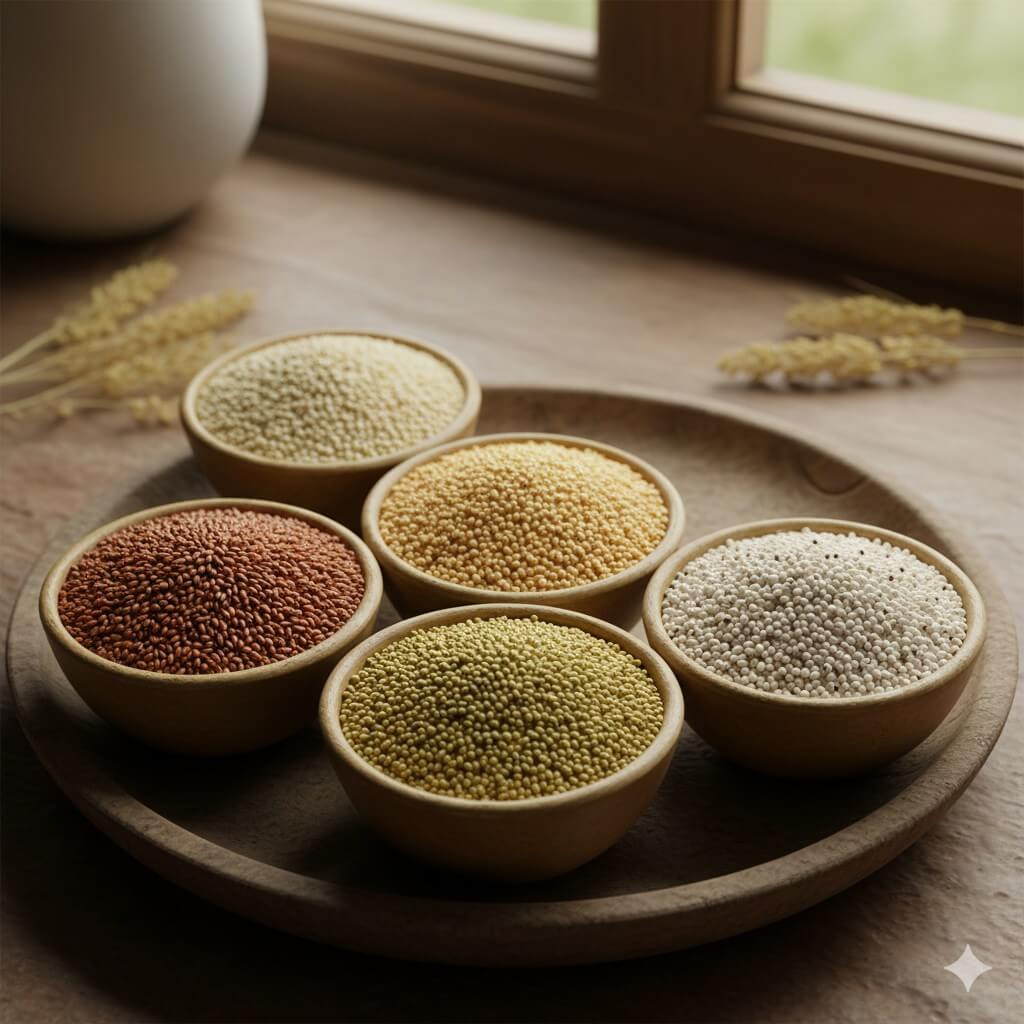
Often referred to as Nutri cereals or orphan crops, millets are small-seeded cereal crops belonging to the Poaceae family. “The word “Millet” derives from the French word “Mille, “ meaning thousands”. They are the 6th most important cereal crops cultivated worldwide and are among the first crops to be domesticated. Being C4 plants (that use a special photosynthetic pathway (the C4 cycle) to fix carbon dioxide, allowing them to thrive in hot, dry climates with high efficiency by minimizing energy-wasting photorespiration), millets are also drought-resistant, disease and pest-resistant, hardy, and dry land crops that can adapt to various climate conditions, hence known as climate resilient crops.
their Significance16 (3); 239-345
[The world of Millets: A comprehensive overview of Millets and their Significance (2024); Journal of Cereal research, Vol. 16 (3): 239-245]
their Significance16 (3); 239-345
Millets are Nutritional Powerhouse
Nutritional Profile (per 100 g, approximate values)
Calories: 300–400 kcal (raw grains); ~119 kcal when cooked (finger millet)
Protein: 6–13 g (pearl millet ~11.6 g; rice ~7.2 g)
Carbohydrates: 60–72 g, mainly complex carbohydrates for sustained energy
Fiber: 6–12 g (about double that of rice)
Fat: 1–5 g, mostly unsaturated
Calcium: Ragi ~350 mg (10 times more than rice, twice that of milk)
Iron: Bajra ~8–9 mg; ragi ~3.9 mg
Magnesium: ~114 mg (27% of daily requirement)
Phosphorus: ~210 mg (17% of daily requirement)
B-vitamins: Niacin, thiamine, riboflavin — essential for metabolism
Glycemic Index (GI)
The Glycemic Index (GI) is a measure of how quickly a food raises blood sugar levels after it is eaten. Foods with a low GI release glucose slowly into the bloodstream, while high-GI foods cause rapid spikes in blood sugar.
Range: 54–68 (low to medium)
White rice comparison: GI ~73–89 (high)
Millets release glucose slowly into the bloodstream, preventing sudden sugar spikes and providing steady energy — a crucial benefit in a country facing a diabetes epidemic.
Health Benefits Across Life Stages
Children & Adolescents
Growing children need more than just a full plate — they need the right nutrients to support rapid physical growth, brain development, and immunity. This is where millets quietly outperform many refined grains. Rich in calcium, iron, protein, and fiber, millets provide steady nourishment without excessive sugars or empty calories.
Bone growth and strength:
Ragi (finger millet) is one of the richest plant sources of calcium, essential for building strong bones and healthy teeth. Regular inclusion of ragi during childhood helps improve bone density, reduces the risk of fractures, and supports proper skeletal development during growth spurts.
Better learning and concentration:
Iron deficiency is a leading cause of anemia in Indian children, often resulting in fatigue, poor attention, and delayed cognitive development. Millets such as bajra and jowar provide bioavailable iron that supports healthy hemoglobin levels, improving oxygen supply to the brain and enhancing learning ability and focus in school.
Support for healthy growth:
Millets contain essential amino acids needed for muscle development and tissue repair. Unlike refined grains, they offer balanced proteins that support physical growth during critical years, making them ideal for school meals and home diets.
Women’s Health
Women’s nutritional needs are higher and more complex due to menstruation, pregnancy, and lactation. Unfortunately, many women in India continue to suffer from anemia, calcium deficiency, and fatigue. Millets offer a simple, affordable, and natural way to meet these increased nutritional demands.
Anemia prevention and energy support:
Iron-rich millets help boost hemoglobin levels, reducing fatigue, dizziness, and weakness. When consumed regularly, they can play a significant role in preventing and managing iron-deficiency anemia — one of the most common health concerns among Indian women.
Pregnancy and lactation support:
During pregnancy and breastfeeding, calcium requirements increase substantially. Ragi’s high calcium content helps maintain maternal bone health while supporting the developing baby’s skeletal structure.
Folate and reproductive health:
Millets contain folate, a vital nutrient that supports healthy cell division and helps reduce the risk of neural tube defects in newborns, making them especially valuable during early pregnancy.
Diabetes Management
With India projected to cross 100 million diabetics by 2030, controlling blood sugar levels has become a national health priority. Diet plays a crucial role, and millets are among the most effective dietary tools for diabetes management.
Low glycemic index advantage:
Millets have a low to medium glycemic index, meaning they release glucose slowly into the bloodstream. This prevents sudden spikes in blood sugar and provides sustained energy throughout the day.
Improved insulin response:
Regular consumption of millets has been linked to better insulin sensitivity and improved HbA1c levels, reducing long-term complications associated with diabetes.
Simple and practical substitution:
Even small dietary changes matter. Replacing rice with millets in just one daily meal — such as lunch or dinner — can significantly improve glucose control without drastic lifestyle changes.
Heart Health
Heart disease is no longer limited to older adults — it is rising rapidly among younger populations as well. Millets support heart health through a combination of fiber, minerals, and antioxidants.
Cholesterol reduction:
The soluble fiber in millets binds with LDL (bad) cholesterol in the digestive tract, reducing its absorption and helping maintain healthier lipid profiles.
Blood pressure regulation:
Millets are rich in magnesium, a mineral that relaxes blood vessels and supports healthy blood pressure levels, reducing strain on the heart.
Protection from oxidative stress:
Antioxidants present in millets help reduce inflammation and protect arteries from oxidative damage, lowering the risk of cardiovascular disease.
Weight Management
Modern lifestyles, desk jobs, and easy access to processed foods have led to rising obesity rates, especially in urban India. Millets help manage weight naturally without restrictive dieting.
Long-lasting satiety:
The high fiber content in millets slows digestion and keeps you feeling full for longer, reducing unnecessary snacking and overeating.
Steady energy without crashes:
Unlike refined grains, millets provide complex carbohydrates that release energy gradually, preventing sudden hunger pangs and fatigue.
Ideal for urban lifestyles:
For people with low physical activity levels, millets offer nutrient-dense calories without excess sugars, making them suitable for daily meals.
Digestive Health
Digestive issues such as constipation, bloating, and irregular bowel movements are becoming increasingly common. Millets support gut health naturally.
Improved gut microbiome:
The fiber in millets acts as a prebiotic, nourishing beneficial gut bacteria that improve digestion and immunity.
Regular bowel movements:
Millets add bulk to the stool, helping prevent constipation and promoting smooth digestion.
Colon health support:
A fiber-rich diet lowers the risk of colon-related disorders and improves overall nutrient absorption.
Gluten-Free Advantage
For individuals with celiac disease or gluten sensitivity, dietary options are often limited. Millets offer a nutritious and safe alternative.
Naturally gluten-free:
Millets contain no gluten proteins, making them safe for people with gluten intolerance or celiac disease.
Highly versatile:
They can be used in traditional Indian foods such as rotis, dosas, porridges, khichdi, and even modern baked products.
Family-friendly choice:
Millets allow families to enjoy the same meals together, eliminating the need for separate diets.
Millets vs Rice & Wheat (At a Glance)
Compared to refined rice and wheat, millets offer clear nutritional advantages:
Higher fiber content for better digestion and satiety
Lower glycemic index for improved blood sugar control
Richer in essential minerals such as calcium, iron, and magnesium
Better support for diabetes management, heart health, and weight control
Modern Relevance
Today, millets are making a comeback — not just in village kitchens but also in urban homes, restaurants, and packaged foods. Nutritionists increasingly recommend them for managing diabetes, obesity, and heart disease.
Millets are not “old-fashioned grains.” They are functional foods that address modern health problems using ancient wisdom. Affordable, versatile, and suitable for all age groups, millets fit seamlessly into today’s lifestyle — without demanding radical changes.
Conclusion
Millets are a complete health package for India. They support children’s growth, strengthen women’s health, help manage diabetes, protect the heart, aid weight control, and improve digestion — all at once.
Re-embracing millets is not about going backward. It is about moving forward more wisely. In a country fighting both undernutrition and lifestyle diseases, millets are not just important — they are essential.
Call to Action
So here’s a simple challenge: start small. Replace rice or wheat with millets in just one meal a day. Try a millet roti, dosa, khichdi, or porridge this week. Your body will thank you — quietly, but sincerely.
And who knows? A few months later, your doctor might smile, your sugar reports might behave, and your stomach might stop protesting after every meal.
Not bad for a grain your grandparents already trusted — right?
Millets: old wisdom, new laughs, healthier lives!
