
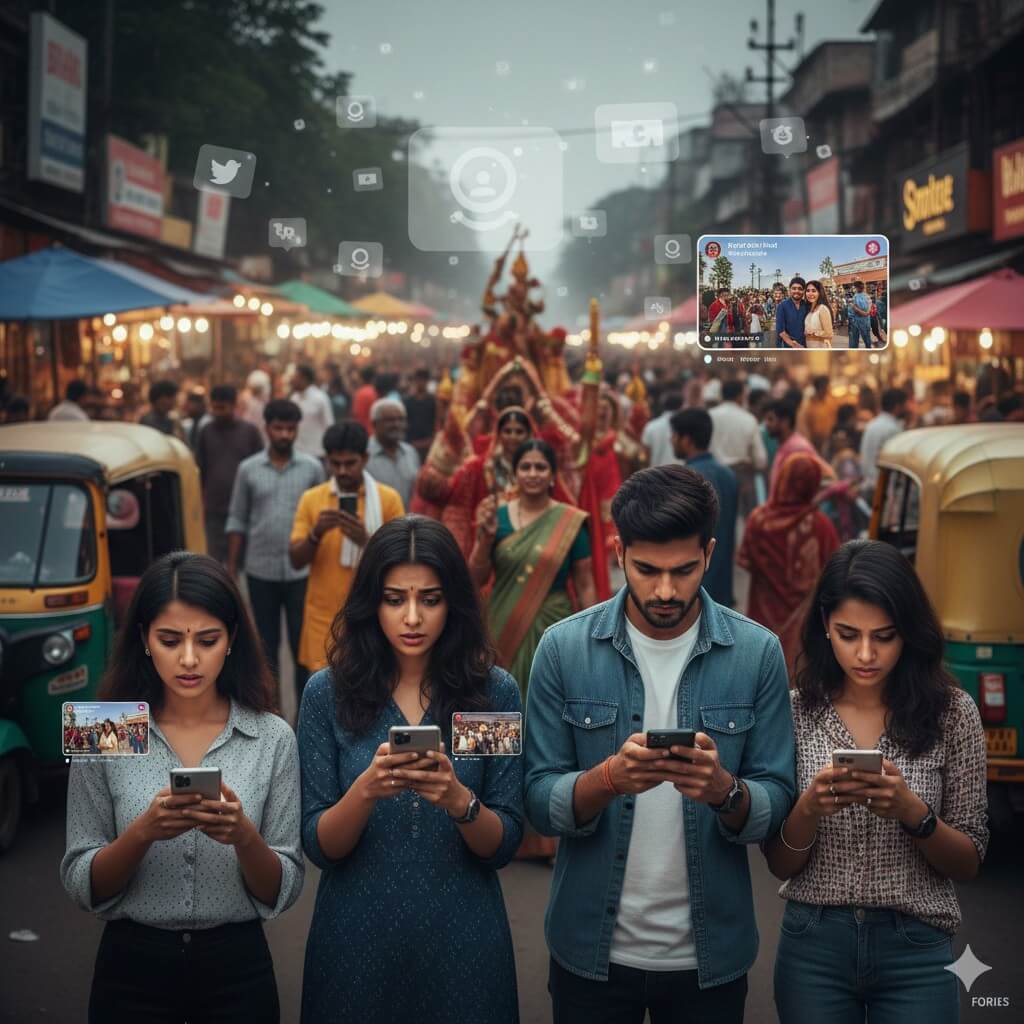
In today’s always-online world, social media has slipped quietly into almost every part of young people’s lives. Apps like Instagram, YouTube, Snapchat, and newer platforms such as Moj or WhatsApp Channels have become daily companions. They help the youth share memories, stay connected, and feel like they’re part of a large digital community. But behind these colourful feeds and catchy reels lies a growing problem—the Fear of Missing Out, or FOMO. It’s that uncomfortable feeling that others are having fun, making progress, or enjoying life in ways you are not. And although it sounds harmless, FOMO is silently pushing many young people towards depression, anxiety, and deep loneliness.
One reason FOMO hits so strongly is because social media rarely shows the truth. What we see online is not real life—it’s the best version of it. People post their vacations, stylish clothes, new achievements, or fun outings, but they don’t show the days when they feel bored, stressed, or insecure. Imagine a teenager scrolling through Instagram on a regular Monday evening and seeing classmates hanging out at a café, or influencers buying gadgets worth thousands. Suddenly, their own life feels dull. They begin to think, “Is everyone doing better than me?” This constant comparison slowly drains happiness.
Social media apps also feed FOMO deliberately. Their entire design—from notifications to story updates—is created to make users keep checking their phones. For instance, Snapchat streaks make teens feel pressured to respond every single day, or else they fear losing a connection. Instagram’s “seen” feature and WhatsApp’s “last seen” status push people to stay online so they don’t appear “inactive” among friends. Gradually, this turns into a habit and then an emotional need. The fear of being left out grows stronger each day.
The internal damage this causes is much deeper than a moment of sadness. FOMO can slowly weaken confidence. Many young people begin to believe that their own life is not exciting or worthy. They start doubting their abilities, comparing their looks, bodies, or achievements to curated online images. This becomes a direct pathway to depression. According to a 2024 report by the Internet and Mobile Association of India (IAMAI), India has over 820 million internet users, and a large portion of them are between 16 and 30 years old. Another survey in 2023 showed that 36% of Indian teenagers feel anxious or low after browsing social media, especially after seeing posts about social events or academic achievements. This growing emotional gap is turning digital “friendships” into shallow connections, where youth feel surrounded online but disconnected in real life.
Loneliness is becoming one of the biggest side effects. Today, a young person might have thousands of followers but still struggle to find someone they can talk to face-to-face. Real friendships often take a backseat because social media encourages people to maintain online images rather than real relationships. Even sleep is affected. A study by the All India Institute of Medical Sciences (AIIMS) in 2024 found that 52% of Indian youth scroll their phones past midnight, mainly out of fear of missing updates, which increases stress and irritation the next day.
This issue becomes even more relatable in the Indian context. With cheap data and easy access, even teenagers in smaller cities and rural areas are now deeply involved in social media. Apps like ShareChat, Moj, and Instagram Reels have become extremely popular. According to Kantar’s ICUBE report (2024), India sees nearly 90 million new social media users every year, making it the fastest-growing country in the world in terms of digital consumption.
Picture a college student in Lucknow or Pune who opens their phone after a long, tiring day and sees classmates attending concerts, eating at expensive cafés, or travelling to hill stations. Or think of a school student in Jaipur who watches YouTubers unboxing the latest phones or showing off their “perfect day routine.” Many start feeling that their own life is somehow “less.” The pressure to fit in, to stay updated, and to constantly post something interesting becomes overwhelming.
There have also been worrying incidents. Newspapers have reported cases where young people felt pushed to extreme sadness because they believed their life was not “as good” as others online. In Bengaluru, a 17-year-old boy confessed during counselling that he felt like a failure because all his friends were posting about coding bootcamps, competitions, and internships. In Bhopal, a group of schoolgirls admitted skipping meals to look like the models they follow on Instagram. These stories are becoming more common as social media creates unrealistic expectations.
Rural India, too, is experiencing this shift. With cheaper smartphones and nationwide 4G coverage, almost everyone—from farmers’ children in Haryana to small-town students in Assam—has access to online trends. Festivals, weddings, and village events are now captured and posted instantly. At first, this feels exciting. But over time, it creates pressure to match what others are doing. A simple birthday celebration starts feeling “not good enough” when compared to glamorous photos seen online.
Girls often face additional stress. Beauty filters, editing apps, and “glow-up trends” make them feel insecure about their natural appearance. Boys, on the other hand, feel pushed to follow influencers who boast about getting rich quickly or living extravagant lifestyles. Both groups feel like they’re constantly lagging behind.
Despite all this, it’s important to remember that social media itself is not the enemy. It has helped many young people find communities, learn skills, and express themselves. But when its use becomes uncontrolled, it begins to control the user. That’s why managing social media habits is essential.
Simple changes can make a big difference. Setting phone-free hours—especially at night—helps the mind relax. Turning off unnecessary notifications reduces anxiety. Many apps now offer screen-time limits; using them can prevent endless scrolling. Unfollowing accounts that trigger jealousy or self-doubt is another healthy step. Schools and colleges can organize awareness sessions to help students understand how social media distorts reality. Parents should talk openly about digital pressure instead of simply scolding children for being online.
India can also take inspiration from global efforts. Countries like the US and Australia have proposed warnings on apps about mental health risks. Indian campaigns like Digital India could add a segment promoting balanced digital habits. Mental health platforms like MindPeers, YourDOST, and IWill Therapy already offer online counselling for youth who feel overwhelmed.
Most importantly, young people need to reconnect with real life. Meeting friends in parks, joining hobby clubs, exercising, spending time with family, and practising gratitude can slowly reduce FOMO. When we appreciate what we already have, the feeling of “missing out” becomes smaller. As the saying goes, “The grass looks greener where you water it.”
In the end, social media is here to stay—but its grip can be loosened. By understanding how FOMO works and choosing healthier habits, India’s youth can protect themselves from sadness, self-doubt, and loneliness. True happiness doesn’t come from likes, shares, or follower counts. It comes from real connections, balanced living, and the quiet confidence that life is meaningful even when it’s not picture-perfect.
