
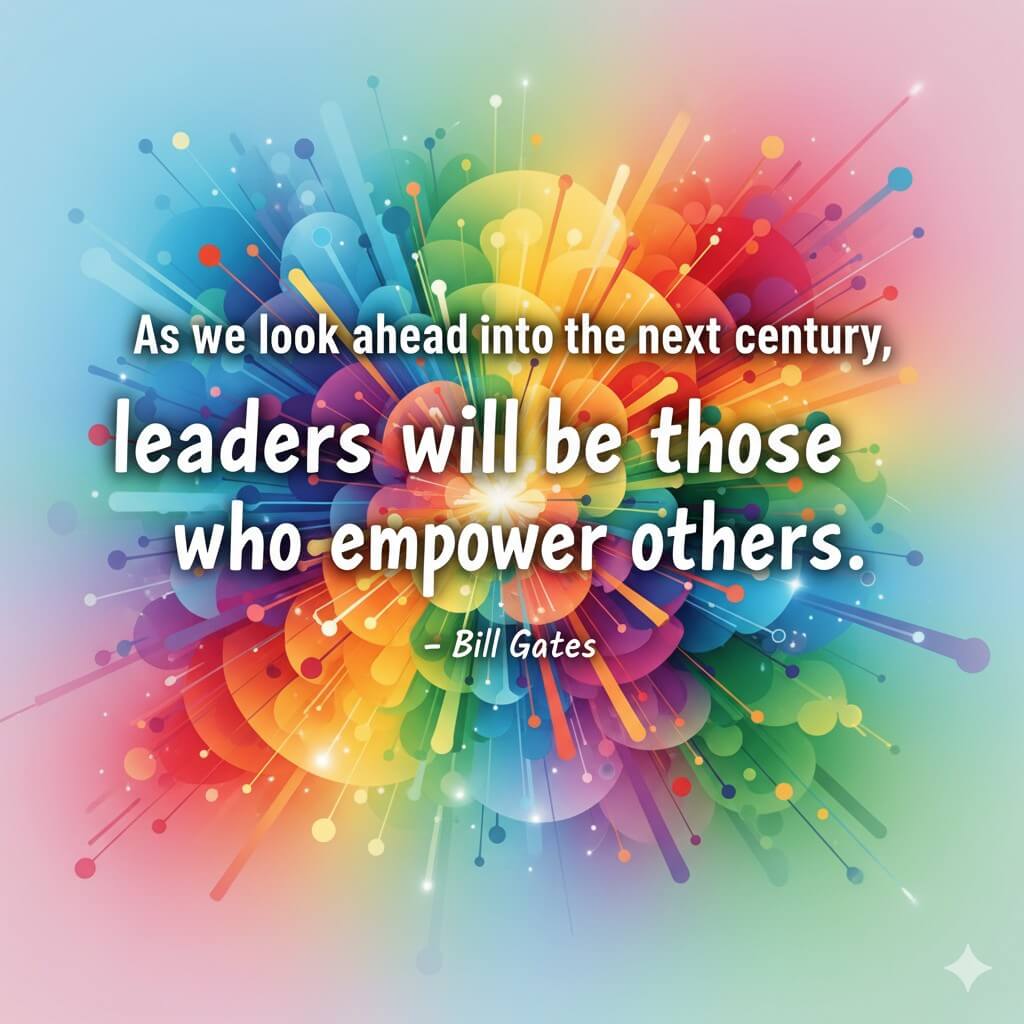
Bill Gates once said, “As we look ahead into the next century, leaders will be those who empower others.” This simple yet powerful statement captures a new way of understanding leadership. For a long time, leaders were seen as people who commanded from the top and made all the big decisions. Their strength came from authority and control. But Gates’ words remind us that real leadership is not about giving orders — it’s about helping others find their own strength, creativity, and confidence. In today’s fast-changing world, true leaders are those who create an atmosphere where people feel trusted, valued, and inspired to do their best work.
This shift from commanding to empowering marks one of the most important changes in how we think about success. The old style of leadership — where people were told what to do and expected to follow — no longer fits the times we live in. The challenges of the modern world require teamwork, innovation, and shared responsibility. Empowering leadership means encouraging people to think for themselves, share their ideas, and take ownership of their work. When people feel that their opinions matter, they become more creative and committed. The best leaders today are not those who stand above others but those who stand beside them — guiding, supporting, and learning together.
Bill Gates himself is a wonderful example of how a leader can evolve. In the early days of Microsoft, he was known for being involved in every small detail. He demanded excellence and often made most of the key decisions himself. This approach worked when the company was small and needed close direction. But as Microsoft grew, Gates realized that innovation could not come from one person alone. He had to trust others to make decisions and experiment with new ideas. Gradually, he changed from being a strict manager to becoming a mentor and visionary — someone who offered direction without controlling every move. This transformation helped Microsoft become a company driven by creativity and collaboration, setting an example for how empowering leadership leads to long-term success.
At the heart of empowering leadership lies the power of trust and freedom. When leaders trust their people and give them the space to explore, they send a strong message: “I believe in you.” This trust gives people confidence to take initiative, try new things, and learn from their mistakes. Gates practiced this belief by encouraging his teams to take risks and innovate, even if it meant failing sometimes. He saw mistakes not as something to punish but as opportunities to grow. Empowerment doesn’t mean letting go of direction — it means balancing freedom with guidance. A great leader provides a clear vision while allowing others to find their own way toward achieving it.
Empowering leaders also act as problem solvers rather than controllers. Instead of focusing on what’s going wrong, they look for ways to remove obstacles so their teams can succeed. This was one of Gates’ most important leadership lessons. He believed that the role of a leader is not to control every detail but to make progress easier for others — by providing the right tools, knowledge, and environment. Whether it’s improving communication, ensuring access to technology, or creating a positive work culture, great leaders clear the path so others can move forward. When barriers are removed, people can focus on what truly matters: creating, improving, and achieving shared goals together.
Empowerment is also deeply connected with learning and adaptability. Gates has always emphasized the importance of being a lifelong learner. In a world where technology and society evolve quickly, leaders must stay curious and open-minded. They must also encourage their teams to keep learning, experimenting, and adapting. Empowering leaders build cultures where curiosity is valued and mistakes are viewed as part of the journey toward improvement. They remind everyone — including themselves — that no one has all the answers. This mindset keeps teams flexible, resilient, and ready to handle change. In such environments, learning never stops, and innovation never runs out of fuel.
When people feel empowered, they also feel more engaged and fulfilled. Empowerment goes beyond giving authority; it’s about showing genuine respect, trust, and appreciation. When employees know their contributions matter, they feel motivated to give their best. Their creativity flourishes, and their work becomes meaningful. Gates’ leadership at Microsoft — and later his work through the Bill & Melinda Gates Foundation — shows how empowerment can inspire both individual and collective success. By listening to diverse voices, sharing responsibility, and celebrating collaboration, he helped his teams achieve remarkable results, from groundbreaking technology to impactful global programs in health and education.
Empowering leadership also transforms how organizations function. The old top-down systems — where orders came from above and everyone else followed — no longer suit today’s interconnected world. The problems we face now are too complex for one person to solve alone. Modern leaders must build teams where ideas can flow freely, where every voice is heard, and where diversity of thought is celebrated. By encouraging open communication and teamwork, empowering leaders create workplaces that are not just productive but also humane and inclusive. People feel respected for who they are and valued for what they bring. Gates demonstrated that success naturally grows in such environments, where collaboration and creativity are part of everyday life.
An empowering leader is also a mentor and coach. Great leaders don’t simply supervise — they guide and inspire others to grow. They take time to nurture skills, build confidence, and share knowledge. Gates has always spoken about learning from others and encouraging the same spirit in his teams. When leaders act as mentors, they help people believe in their potential. Over time, empowered individuals go on to empower others, creating a cycle of trust, learning, and growth. This ripple effect builds a culture of continuous improvement — where everyone contributes to collective success and no one is left behind.
Of course, empowerment is not without its challenges. It asks leaders to give up some control and trust others, which can feel uncomfortable for those used to traditional leadership models. But as Gates discovered, real innovation and progress only happen when people feel trusted. Micromanagement may produce short-term results, but empowerment builds long-term strength. When leaders empower others, they create teams that can adapt and perform even when the leader is not present. Such leaders shift from being the “heroes” who do everything themselves to the “guides” who help others become heroes in their own right. This change transforms leadership into an act of service — a way of helping others shine and succeed.
In a world filled with challenges like climate change, inequality, and rapid technological disruption, the need for empowering leadership has never been greater. No single person can solve these problems alone. We need leaders who bring people together, share power, and inspire cooperation. Gates’ insight shows that leadership is not about authority or fame but about enabling others to make a positive difference. Empowering leadership builds stronger teams, better solutions, and more resilient communities. It turns leadership into a shared mission for collective good.
Ultimately, Bill Gates’ timeless observation that the leaders of the future will be those who empower others carries a message of hope. Empowerment unlocks the best in people — it sparks creativity, fuels progress, and spreads positivity. When leaders trust, support, and encourage others, they create ripples of growth that reach far beyond themselves. Such leadership is rooted in kindness, humility, and vision. It replaces control with collaboration, and fear with faith.
As we move deeper into this century, empowerment will continue to define the best kind of leadership. It is what turns ideas into innovation, individuals into teams, and challenges into opportunities. By following Gates’ example — leading with trust, compassion, and purpose — we can create a future where everyone has the chance to shine, contribute, and succeed together. The true mark of a great leader will always be measured not by how much power they hold, but by how much power they give away to help others rise.
References
Bill Gates leadership style and empowerment philosophy:
Bill Gates leadership approach focused on project wins and empowerment
Insights on Bill Gates leadership traits and empowerment focus
Specific leadership lessons from Bill Gates showcasing empowerment
Bill Gates on what sets great leaders apart – a trait related to empowerment
