
Why Food Waste Is Everyone’s Problem
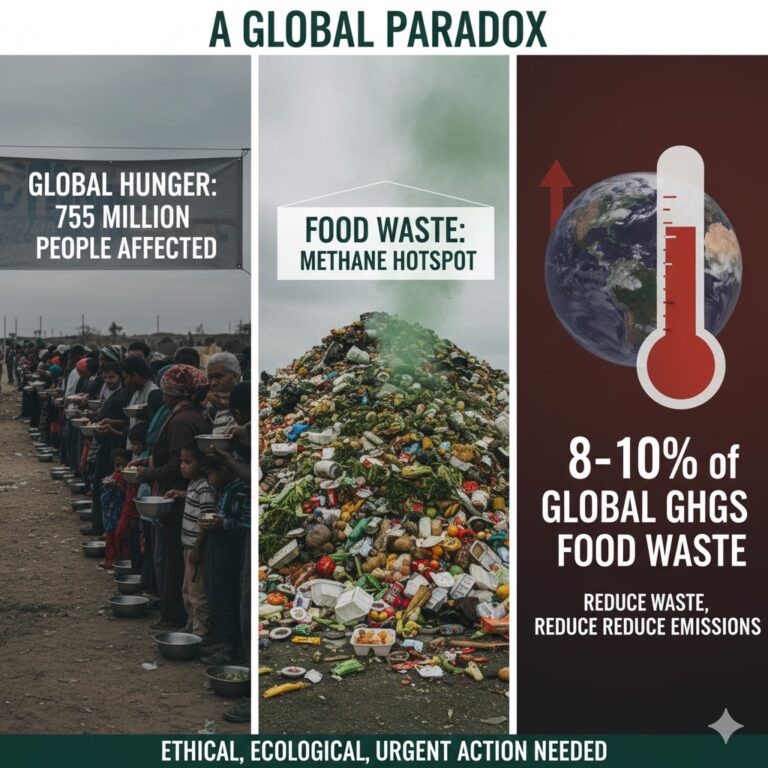
Every day, millions of tons of food embark on a heroic journey — from farms to trucks, warehouses to supermarkets, and finally onto our plates. Yet, shockingly, a huge chunk never gets eaten. According to FAO-UNEP, about 13.2% of food is lost before it reaches stores, and another 19% is wasted at retail, restaurants, and homes globally. Meanwhile, over 780 million people are undernourished. Imagine a buffet where everyone has plates overflowing, except those at empty tables — that’s our world right now.
Food waste isn’t just a “Oops, I burned the toast” problem. It’s a global headache with ethical, economic, and environmental hangovers. Reducing food waste can:
Ease hunger: Give surplus food a second chance to feed someone in need.
Cut greenhouse gas emissions: Food in landfills produces methane — the climate villain nobody wants.
Save money: Stop tossing cash along with kale.
Protect resources: Water, land, and energy vanish when food is wasted.
Every September 29, FAO and the UN spotlight the International Day of Awareness of Food Loss and Waste. It’s a reminder that tossing food is like throwing away tiny opportunities for a better planet. It also supports SDG 12.3, urging countries to halve per-capita food waste by 2030.
Contents:
What Is Food Waste — Scope, Definitions, and Scale
Food Loss vs. Food Waste
The Scale of the Problem
Why Tackling Food Waste Matters
Ethical & Social Impact
Environmental & Climate Implications
Economic & Resource Drain
Policy, Food Security & Global Goals
Tackling Food Waste from Farm to Table — Actionable Steps
On the Farm & During Production
Processing, Transport & Supply Chain
Retail & Business Levels
Consumer & Household Level
Policy & Systemic Interventions
What Is Food Waste — Scope, Definitions, and Scale
Food Loss vs. Food Waste
Let’s get the lingo straight. Food loss and food waste are cousins, not twins:
Food Loss: Happens before food hits stores — crops rotting in fields, poor storage, or transport issues. Farmers feel the brunt.
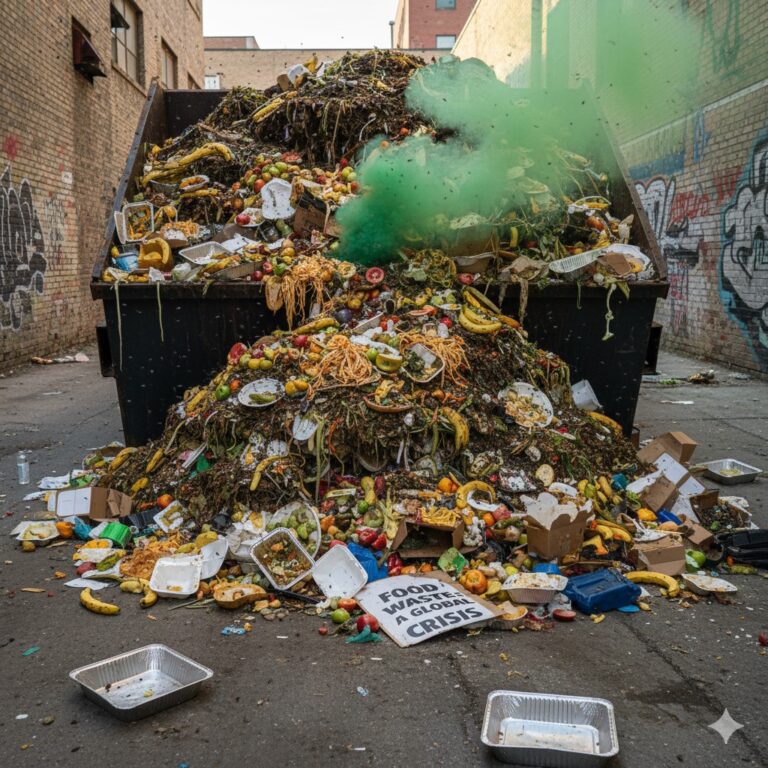
Food Waste: Happens after food enters retail or households — supermarkets tossing unsold veggies or you throwing leftovers because they “look sad.”
Understanding the difference helps target interventions like eco-warriors with spatulas.
The Scale of the Problem
Globally, about one-third of food produced never gets eaten — that’s 1.3 billion tonnes!
Pre-retail losses: ~14% of food, costing roughly US$400 billion annually.
Post-retail waste: 17-19% at homes, restaurants, and stores.
And fruits and veggies? The drama queens of food, losing over 25% before reaching us. Meanwhile, meat and animal products aren’t far behind. If food waste were a country, it’d rank third in greenhouse gas emissions, right after the US and China. Talk about a heavy carbon footprint!
Why Tackling Food Waste Matters
Ethical & Social Impact
Wasting food while millions go hungry isn’t just careless — it’s embarrassing, like wearing socks with sandals to a wedding. Every time bread goes stale, rice sits uneaten, or an apple rolls into the trash, it’s a little slap in the face to families who struggle to get enough to eat. Picture kids skipping meals while perfectly good food rots nearby — not a pretty picture, right?
Even rescuing a fraction — say, just 25% of what’s lost or wasted — could feed millions of hungry mouths. That’s pasta, lentils, and veggies going from “oops” to “hooray!” on someone else’s plate. Every discarded apple or lonely carrot is a missed chance to bring nourishment, joy, and maybe even a smile to someone’s day. Fighting food waste isn’t just eco-friendly or wallet-friendly; it’s basically superhero work for humanity — capes optional, conscience mandatory.
Environmental & Climate Implications
Food production guzzles resources:
Water: Agriculture consumes 70% of global freshwater — wasted if food is trashed.
Land: Over 1.4 billion hectares are devoted to uneaten food — Mexico + Australia combined, gone.
Climate: Food waste contributes 8–10% of global greenhouse gas emissions.
Forests are chopped down for food nobody eats — like buying a luxury car just to let it rust in your driveway. Yep, that’s our planet facepalming.
Economic & Resource Drain
Globally, food losses cost hundreds of billions of dollars — not just the food itself, but all the labor, transport, storage, and disposal that went into it. And households in rich countries throw away 95–115 kg per person per year. That’s like tossing out a full-grown cow… in rice equivalents! Or imagine buying a small car every year and feeding it to the compost bin instead — now that’s a luxury nobody really needs.
Policy, Food Security & Global Goals
SDG 12.3 targets cutting global food waste in half by 2030 — yes, half! That’s the United Nations basically saying, ‘Stop tossing out grandma’s leftovers and start saving the planet.’ Tools like the Food Loss Index and Food Waste Index help countries track progress, so we actually know if we’re winning the food fight or just pretending. FAO & UN encourage standardized measurements, because otherwise it’s like weighing your fridge with a bathroom scale — good effort, but not very accurate.
SDG stands for Sustainable Development Goals, a set of 17 ambitious global goals set by the UN to make the world fairer, greener, and healthier by 2030. Goal 12 is all about responsible consumption and production — basically, don’t be wasteful, save the planet, and maybe stop overbuying that third pack of avocado toast
Tackling Food Waste from Farm to Table — Actionable Steps
Food waste is sneaky — it can appear anywhere, like a ninja. We need interventions at every step of the supply chain.
On the Farm & During Production
- Improved Harvest Methods & Storage: Cold storage, drying facilities, and silos are farmers’ new Best Friends Forever — because without them, crop produce spoil faster than pizza left in a hot car overnight. Seriously, those tomatoes didn’t ask to become compost!
- Market Access & Aggregation: Small farmers often get stuck in limbo, like a Tinder date waiting for a reply. Connecting them to markets ensures good food doesn’t sit lonely on the farm wondering when it’ll be eaten.
- Adaptive Varieties & Resilience: Drought-tolerant and pest-resistant crops take the hits like superheroes — battling pests and harsh weather to ensure your meals make it to your table. Think of them as the Avengers of the agriculture world.
Processing, Transport & Supply Chain
- Better Infrastructure: Roads, packaging, and cold chains are like seatbelts for food — they save it from becoming ‘roadkill’ on the way to your grocery store. Without them, your lettuce might arrive looking like it survived a wrestling match.
- Ugly Produce Acceptance: Just because a carrot has a quirky shape or a potato sports a bump doesn’t mean it tastes any different. Give these unique veggies a chance — they’re the superstars of the produce world
- Forecasting & Logistics: Smart tech helps predict demand and optimize transport, reducing spoilage along the way. Because let’s face it: wasted food equals wasted effort, wasted money, and a very sad cow somewhere wondering why it worked so hard for nothing.
Retail & Business Levels
- Donations: Unsold food doesn’t have to retire to the trash bin — it can feed someone hungry instead. Think of it as giving leftovers a second act, like a food-themed sequel that actually makes sense.
- Dynamic Discounting: Near-expiry foods get a second chance at life thanks to price cuts. It’s basically a “buy one, save a planet” kind of deal — your wallet and the Earth both cheer.
- Waste Audits: Businesses track where food mysteriously vanishes and plug the holes. Think of it as Crime Scene Investigation: Kitchen Edition — solving the mystery of the missing muffins and runaway radishes.
Consumer & Household Level
- Meal Planning & Smart Shopping: Buy only what you truly need. Yes, even that kale you swore you’d eat but keeps haunting your fridge like a leafy ghost. Making a list isn’t just adulting—it’s a superpower against food waste.
- Leftover Creativity: Yesterday’s pasta isn’t just sad leftovers—it’s tomorrow’s frittata, soup, or stir-fry superstar; leftover aloo sabzi? Paratha filling!. Think of it as giving your meals a second life……. or a plot twist worthy of a cooking reality show.
- Composting & Awareness: Learn the difference between “best before” and “use by” dates so food isn’t unfairly kicked out early. And scraps? Give them a dignified exit in a compost bin, turning peelings into soil gold instead of landfill regret.
Policy & Systemic Interventions
- National Targets: Countries are rallying behind SDG 12.3, aiming to slash food waste by 50% by 2030. Think of it as the global “diet plan” for our food system—less excess, more impact, and hopefully fewer sad salads in the trash.
- Legal Frameworks: Laws can actually help food survive its shelf life! By encouraging donations, cutting red tape, and giving businesses a nudge, we can keep edible food out of landfills and on plates instead.
- Research & Innovation: Science isn’t just for labs—it’s for leftovers too! Tracking, measuring, and reducing waste with smart tech and clever solutions ensures that every carrot stick and grain of rice gets its moment of glory.
Innovations & Success Stories
- WWF’s Driven to Waste Report: Around 2.5 billion tonnes of food vanish uneaten each year. That’s like a global ghost banquet happening every single day—inviting everyone except the people who actually need the meals!
- Household Awareness Campaigns: A little education (and a pinch of peer pressure) goes a long way. When citizens learn to plan meals and store food properly, waste drops faster than a hot potato at a summer picnic.
- Business Examples: Restaurants and retailers are getting savvy. Chefs audit leftovers like detectives on a mystery case, while supermarkets use dynamic pricing and donation strategies—giving near-expiry goods a second chance at life, and saving your wallet from guilt purchases.
Challenges on the Path
Even with the best intentions, tackling food waste isn’t exactly a walk in the organic garden.
Infrastructure Gaps: In low-income regions, food sometimes takes a detour to “Lost & Found” via poor storage, bumpy roads, and weak cold chains. Spoiled tomatoes are the unofficial casualties.
Cultural Habits: Some societies treat overbuying as a status symbol. Those spinach, broccoli, and zucchini you bought in bulk because ‘you deserve it’ might end up as composted regret.
Regulatory & Legal Obstacles: Food safety laws sometimes have the unintended side effect of turning edible goods into landfill material. The carrot that failed a cosmetic check? Trash-bound.
Lack of Awareness or Data: If you don’t know how much food is wasted, it’s hard to fix the problem. Some regions literally have “food invisibility cloaks” over their losses.
What You (as a Reader) Can Do to Reduce Food Waste
Yes, you! Even if your cooking skills peak at instant noodles and buttered toast, there’s a lot you can do to fight food waste—and maybe impress your neighbors or earn brownie points on your WhatsApp family groups.
- Meal Planning & Smart Shopping: Buy only what you actually need—yes, even that giant packet of masala peanuts grabbed in a snack craving. Make a list and stick to it; each careful purchase is a mini win. In India, planning meals ahead keeps your fresh paneer or bhindi from turning into “oops” moments.
- Leftover Creativity: Yesterday’s mixed vegetable curry? Today’s sandwich filling. That sad carrot or capsicum? Toss it in a stir-fry or make a spicy chutney. Leftover chole can become stuffing for a paratha, while stale rotis can be transformed into crispy chips. Magic happens when you get creative!
- Composting & Awareness: Know the difference between “best before” and “use by.” Not every tomato or banana needs the bin—sometimes a quick sabzi or smoothie saves it. Composting isn’t gross; your worms and garden soil will happily feast on potato peels and leafy greens.
- Support Food Recovery Programs: Donate extra rice, lentils, or unopened packets of snacks to local NGOs, temples, or community kitchens. That extra pack of idli mix could feed someone’s breakfast—and in India, it helps balance the gap between abundance and hunger.
- Advocate & Educate: Speak up about food waste at home, work, or online. Teach friends to shop smart and reuse creatively. If a cousin buys 10 packs of paneer—or a whole pile of green veggies—challenge them: ‘How many dishes can we make before they expire?’ Awareness spreads faster than leftover pav bhaji going cold
Finally: A Call to Action
- Plan Meals & Shop Smart: Make a list, stick to it, and resist impulse buys—yes, even that “extra spicy” chutney you don’t really need. Treat your shopping cart like a mini battlefield against waste. Every smart choice is a win for your fridge, wallet, and the planet.
- Store Food & Read Labels: Keep veggies crisp, grains fresh, and dairy cool. Learn “best before” vs. “use by”—that sad tomato might still shine on your plate. Smart storage keeps your fridge from becoming a tiny landfill.
- Use Leftovers & Compost the Rest: Turn yesterday’s curry into today’s sandwich filling or stale bread into croutons. Anything uneatable? Compost it! Worms and soil microbes throw a party for your veggie scraps.
- Support Restaurants & Retailers: Pick eateries that rescue surplus food and reward shops offering near-expiry discounts. Every meal saved is a high-five to businesses fighting waste.
- Spread Awareness — September 29: Mark the International Day of Awareness of Food Loss and Waste. Rally friends, family, and neighbors. Share tips, post hacks, and celebrate every rescued meal. Happy plates, happy planet, happy hearts!
So go ahead, be the hero your fridge deserves! Turn leftovers into legends, compost like a boss, and cheer for every rescued meal. Because saving food = saving money, the planet, and your karma—one bite at a time!
