
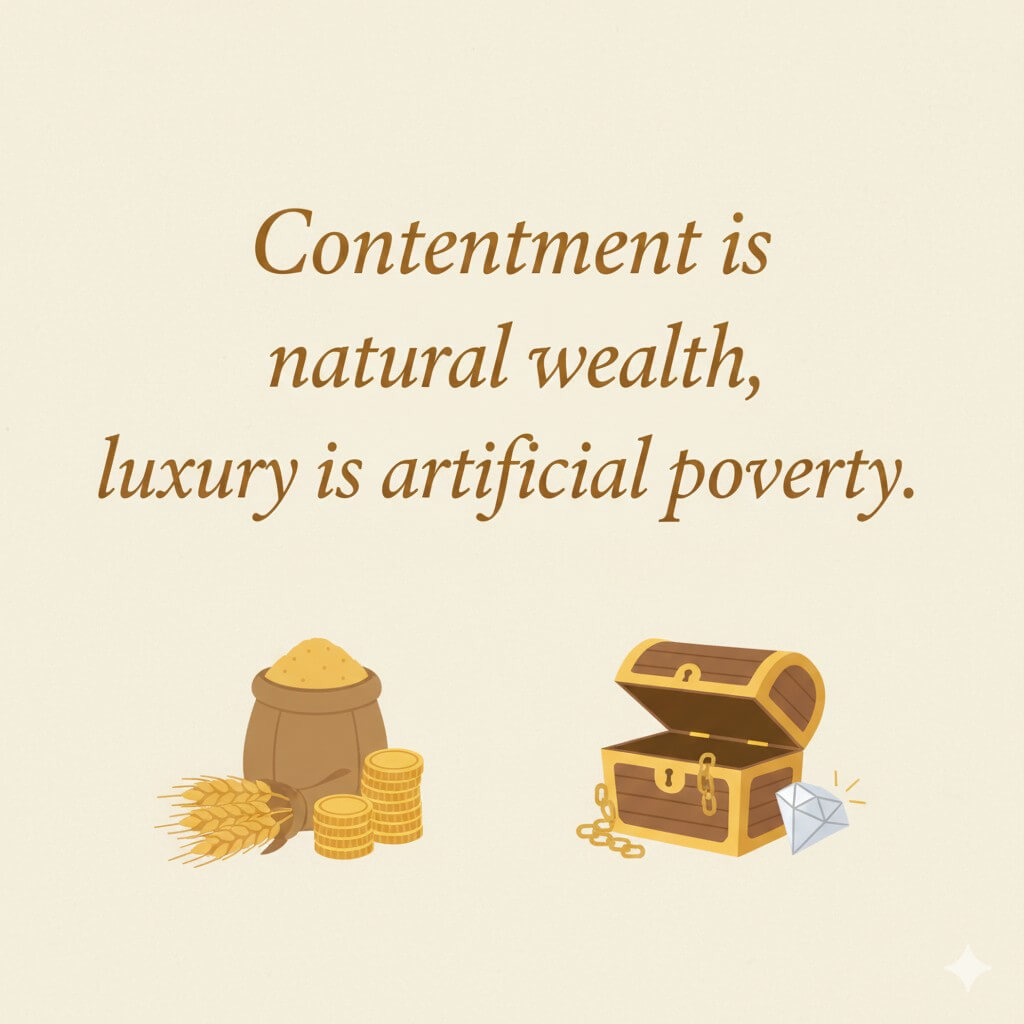
There’s an old saying, often credited to Socrates, that contentment is natural wealth while luxury is artificial poverty. At first glance, this might sound backward. After all, how can luxury make us poor? But think about it for a moment. True wealth isn’t really about how much stuff we own. It’s about feeling satisfied with what we have.
Contentment means being at peace with your life as it is right now. It’s waking up and feeling grateful for your home, your relationships, your health. Luxury, on the other hand, always whispers that you need more. A bigger house. A fancier car. The latest phone. And here’s the catch—no matter how much you get, luxury always leaves you feeling like something’s missing.
Let’s be clear though. Contentment doesn’t mean giving up on your dreams or never wanting to improve your life. It’s not about settling. It’s about knowing the difference between what you truly need and what you simply want because someone else has it. A contented person can enjoy their modest apartment without feeling bad that they don’t own a penthouse. They’re happy with a car that runs well, even if it’s not the newest model.
The thing about luxury is that it works on comparison. You buy something expensive and feel great for a while. Then you see someone with something better, and suddenly what you have doesn’t feel like enough anymore. You’re back to feeling poor, even though you have plenty. That’s the artificial poverty—it exists only in your mind.
This matters so much in our lives today because we’re constantly being sold stuff. Every ad, every social media post, every influencer is telling us we need the next big thing to be happy. Buy this, upgrade that, treat yourself to something expensive. It creates this endless cycle where we work harder to earn more, spend more to feel satisfied, and somehow end up no happier than before.
And here’s what research actually shows: once you have enough money to cover your basic needs, more money doesn’t make you that much happier. What really matters? Things like being grateful for what you have, having good relationships, feeling like your life has meaning. But we often ignore these things while chasing after expensive stuff that doesn’t really fulfill us.
The mindset you choose today shapes your entire future. If you embrace contentment, you make decisions based on what actually matters to you, not what looks good to others. Maybe you pick a job you love over one that just pays more. Maybe you spend time with family instead of working overtime to buy things you don’t really need.
This creates a life that feels stable and genuine because your happiness doesn’t depend on everything being perfect all the time. But if you organize your life around chasing luxury, you’re building on shaky ground. Your happiness depends on keeping up a certain lifestyle, and if anything changes—you lose your job, the economy tanks, or you just get older—everything can fall apart.
Plus, always wanting more means you’re never really enjoying what you have right now. You miss out on relationships, health, and personal growth because you’re too busy working to afford the next upgrade. Let me give you an example. Imagine two friends who both have good jobs and earn decent salaries. The first one chooses contentment.
She lives in a nice but modest apartment, spends money on experiences with friends and family, and saves some for the future. She’s not stressed about money. When life throws her a curveball—maybe she wants to change careers or faces a health issue—she has both the savings and the peace of mind to handle it. Her happiness was never about having the fanciest stuff, so she adapts without feeling like she’s lost something important.
Years later, she looks back on a life full of good memories, strong friendships, and personal growth. The second friend goes the luxury route. He buys an expensive house, drives a high-end car, takes lavish vacations, and constantly upgrades his possessions. Even though he earns good money, he’s always stressed about finances. He’s in debt and living paycheck to paycheck, just at a higher income level.
When challenges come his way, he feels trapped. Cutting back feels like failure. He’s worked so hard to maintain this image that he’s let his relationships suffer. The stress affects his health. Years down the line, despite all the impressive things he owns, he feels empty inside and wonders what it was all for.
Here’s another example from the professional world. Consider a corporate executive who climbs the ladder for twenty years. She earns a six-figure salary, has a corner office, and all the status symbols that come with success. But she works seventy-hour weeks, rarely sees her family, and feels constantly anxious about maintaining her position.
Her entire identity is wrapped up in her title and salary. When she’s eventually passed over for a promotion or faces corporate restructuring, she feels devastated. Despite her impressive resume and bank balance, she realizes she’s sacrificed the things that actually mattered—her health, her marriage, time with her children. The luxury lifestyle she built feels hollow because it cost her everything else.
On the flip side, think about a teacher or a social worker who chose their career knowing it wouldn’t make them rich. They live modestly, but they come home each day feeling like their work matters. They have time for family dinners, weekend hobbies, and friendships. They’re not stressed about keeping up appearances or climbing any ladder.
Years into their career, they look back with genuine satisfaction. Less money, sure, but more life. That’s the power of contentment. Understanding that contentment is natural wealth frees you from the exhausting race to always have more. It lets you focus your energy on what actually makes life rich: real connections with people, doing work that feels meaningful, growing as a person, and appreciating what’s in front of you right now.
This doesn’t mean you have to reject all comforts or live like a monk. It just means being wise enough to know the difference between what truly makes your life better and what just feeds your ego or makes life more complicated. In today’s world, where we’re increasingly worried about sustainability, mental health, and what really matters, this old wisdom feels more relevant than ever.
It offers a simple truth: less really can be more. Real wealth isn’t measured by what’s in your garage or your closet. It’s measured by peace of mind, by the quality of your relationships, by how you feel when you wake up in the morning. The person who understands this lives differently. They’re not constantly stressed about money or status.
They don’t feel the need to impress others with what they own. They enjoy simple pleasures—a good conversation, a beautiful sunset, a home-cooked meal—without feeling like they’re missing out. When challenges come, they’re resilient because their sense of worth isn’t tied to external things.
That’s the real paradox. The more we chase luxury, the poorer we feel. The more we embrace contentment, the richer life becomes. It’s not about the size of your house or your bank account. It’s about the size of your gratitude and your capacity to enjoy what you already have. That’s natural wealth, and unlike luxury, it can never be taken away from you.
