
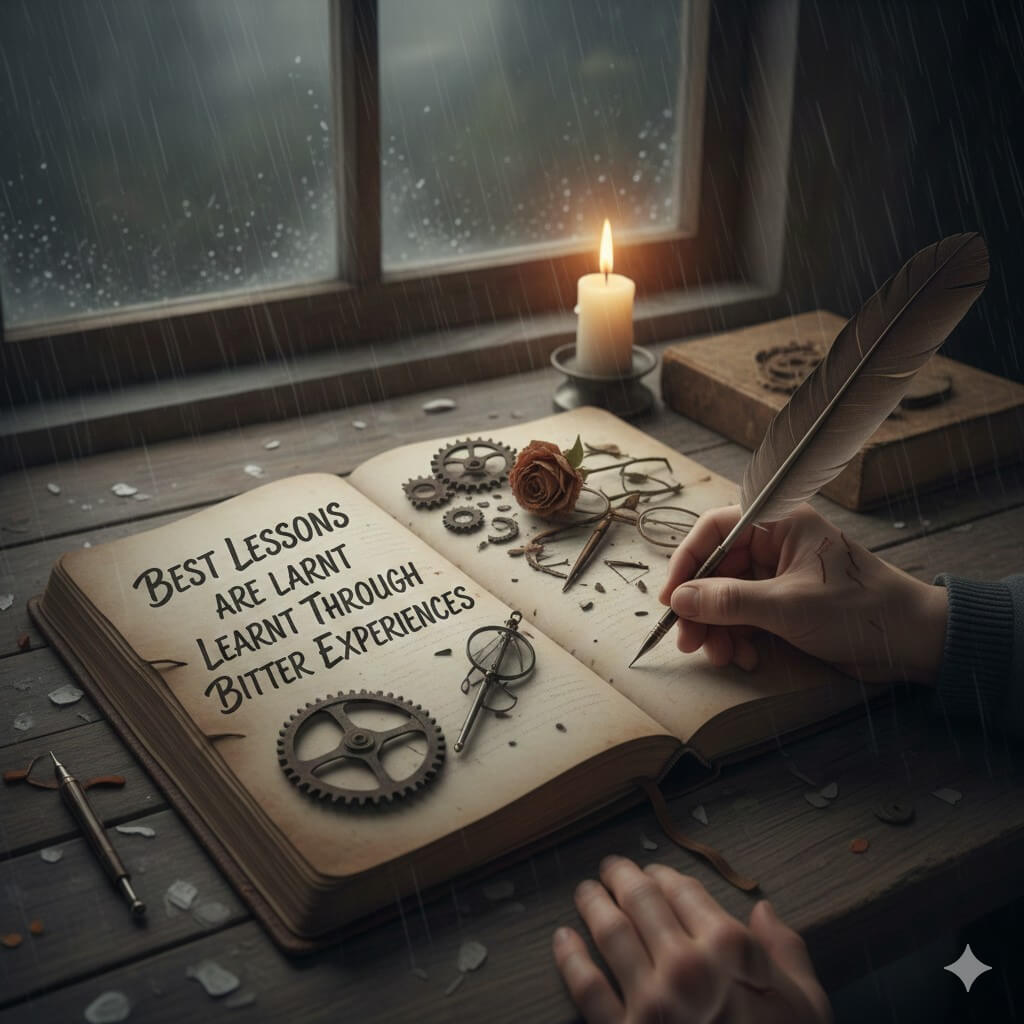
Some of the deepest and most important lessons in life do not come from happy times or easy successes. They usually come from difficult, painful, or uncomfortable experiences. Good moments give us joy, but bitter experiences stay with us for a lifetime. They change how we think, how we act, and who we become. This is why people say that the best lessons are learned through bitter experiences.
Hard times force us to face the truth, question our beliefs, and grow stronger. This is true for individuals, for societies, and even for whole nations. If we look at history or at our own lives, we will see the same pattern again and again—pain teaches us what comfort never can.
When something goes wrong, when we fail, or when we lose something important, the learning becomes very real. We feel the emotion, we remember the moment, and the lesson becomes a part of us. One single painful experience can teach us more than many successes. A bitter memory often guides us years later, helping us avoid the same mistake.
India’s freedom struggle shows how powerful bitter experiences can be. The Jallianwala Bagh massacre of 1919 is one of the most tragic events in Indian history. On that day, British General Dyer ordered his soldiers to fire on thousands of innocent men, women, and children gathered in an enclosed garden in Amritsar. Hundreds were killed, and many more were injured. The event shocked the entire nation.
Before this, many Indians still believed that the British could be persuaded to give more rights or fair treatment. But after Jallianwala Bagh, people realized that peaceful requests were not enough. The cruelty of the incident united India in a way nothing else had. It strengthened the freedom movement, inspired Gandhi’s non-cooperation movement, and convinced millions that complete independence—not small reforms—was the only answer. This bitter experience changed the direction of the entire freedom struggle.
Another example from India is the 1991 economic crisis. For many years, India followed a very closed and controlled economic system. The idea was to protect Indian industries and maintain independence from foreign influence. But over time this system created corruption, slow growth, and inefficiency. By 1991, India was on the edge of bankruptcy. The country barely had enough foreign exchange to buy necessary imports for even a few weeks.
To survive, the government had to send gold reserves to the Bank of England as a guarantee for loans. It was a difficult and humiliating moment for the country. But this painful experience forced India to accept the need for major economic changes. The government opened the economy, removed many old rules, invited foreign investment, and encouraged competition. These reforms helped India become one of the fastest-growing major economies in the world. What felt like a disaster at that time became the beginning of a new journey. Sometimes the lowest point gives us the push we need to rise.
The world also has many examples of learning through hardship. The COVID-19 pandemic is one of the biggest global crises in recent times. When the virus appeared, most countries were unprepared. Hospitals were overwhelmed, healthcare workers were exhausted, and millions of people lost their lives. Entire economies shut down. Schools closed. People were isolated in their homes. It was a bitter experience for the whole world.
But the pandemic also taught important lessons. It showed the importance of a strong healthcare system, emergency planning, and global cooperation. Countries that had prepared earlier or learned from past outbreaks did much better. The crisis also changed how we work—suddenly, millions realised they could do their jobs from home. Offices adopted remote work at a speed no one expected. Schools moved to online learning, which revealed the huge digital divide between students. These lessons have pushed governments to focus more on healthcare, technology, and education.
The pandemic also reminded us how connected we are as human beings. It did not matter how rich, powerful, or advanced a country was—everyone was affected. We learned that public health depends on everyone working together. Wearing masks, maintaining distance, and getting vaccinated became acts of social responsibility. The long periods of isolation taught people to value family time, friendships, and simple human contact. The crisis also brought more attention to mental health, loneliness, and emotional well-being.
Bitter experiences also shape our personal lives. A painful betrayal teaches us whom to trust. A failure at work teaches us humility and the importance of learning. Many entrepreneurs say their biggest failures taught them the most valuable lessons. A health problem often forces people to change their habits and take better care of themselves. Sometimes a heart attack does what years of advice could not—it pushes someone to adopt a healthier lifestyle.
However, it is important to note that bitter experiences alone do not guarantee growth. Two people can go through the same hardship, but one may become stronger while the other becomes discouraged or angry. What truly matters is how we respond. Learning from pain requires courage, honesty, and a willingness to reflect. We must accept our mistakes, understand what went wrong, and decide to move forward with wisdom.
If we do this, even the hardest moments can become turning points. Our struggles start to guide us instead of holding us back. The scars we carry become reminders of our strength and our progress.
When we look at our lives, and at the history of nations, we see a clear truth: challenges shape us more than comforts do. India learned from the cruelty of colonial rule and from the shock of economic crisis. The world learned from the destruction caused by the pandemic. Individuals grow when they fall and rise again. Communities become stronger after surviving disasters together.
In the end, the best lessons truly do come from bitter experiences. They may hurt, but they help us grow, understand ourselves better, and build a stronger future. They show us what matters, what needs to change, and what we are truly capable of becoming.
