
AI-powered saving apps have revolutionized personal finance in India by automating the process of saving small and variable amounts, and investing them wisely in market-linked schemes. These apps use intelligent algorithms to track spending habits, enabling users to save effortlessly without constantly thinking about it.
As smartphone usage and digital payment adoption rise, these tools empower millions of Indians to build wealth with minimal effort. This blog explores how these apps work, the technology behind them, the regulatory framework, user precautions, benefits, risks, and eligibility criteria.
Contents:
Mechanism of Automated Variable Savings & Investments
Linking Bank Accounts Securely
Once you download an AI-powered saving app, you can link your bank accounts and digital wallets through secure API connections. These apps comply with stringent security standards like end-to-end encryption to ensure your financial data remains protected.
The linked accounts provide real-time visibility into your income, expenses, and balances — forming the foundation for automated savings decisions.
Spending Pattern Analysis Through AI
Machine learning algorithms analyze your transactional data to understand your spending habits. The AI categorizes expenses (such as groceries, utilities, or entertainment) and calculates the remaining disposable amount available for saving after essentials.
Advanced predictive models can also forecast upcoming expenses — like utility bills or EMIs — helping the app determine when and how much to save without causing financial inconvenience.
Automatic Savings and Investment
Based on AI insights, the app automatically transfers small, variable amounts from your linked bank account into a savings or investment account.
Some apps offer a “round-up” feature — rounding each transaction to the nearest rupee and saving the spare change. These micro-savings are then aggregated and invested into diversified portfolios, including gold, mutual funds, or ETFs.
Investments occur seamlessly in the background, empowering users to build wealth gradually and effortlessly.
Investment Portfolio Allocation
AI-driven portfolio management systems optimize asset allocation based on your risk profile and financial goals. The portfolio dynamically adjusts according to market conditions and your changing spending behavior.
Most apps allow customization — users can choose conservative, moderate, or aggressive investment modes, each with varying exposure to equities, gold, and debt instruments.
User Controls & Transparency
Despite automation, users retain complete control. Each app provides a detailed dashboard showing savings history, investment performance, fees, and projected growth.
You can set saving limits, pause automated transfers, or withdraw funds anytime. Real-time notifications and alerts ensure full transparency and help you track your progress effortlessly.
Technology That Powers AI Saving Apps
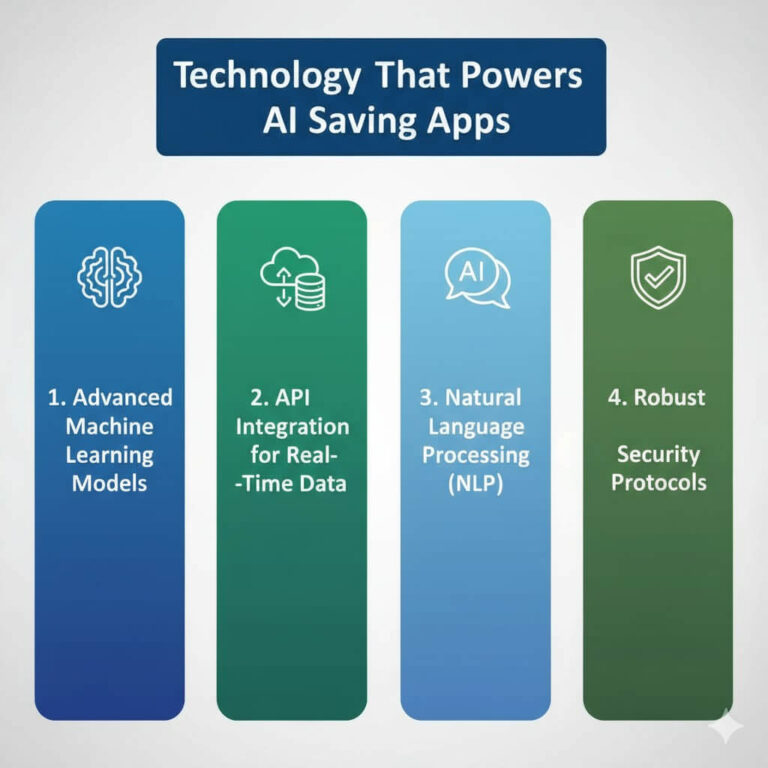
Advanced Machine Learning Models
Machine learning (ML) forms the brain of AI saving apps. These algorithms process vast amounts of transactional data, learn user behavior, identify spending patterns, and predict optimal saving opportunities.
Over time, ML models adapt and become more accurate as they learn from new data — enabling hyper-personalized financial recommendations.
API Integration for Real-Time Data
Secure API integrations allow these apps to connect with banks and payment gateways for real-time synchronization of transaction details. This enables accurate expense tracking and timely saving actions.
A unified API framework lets users manage multiple financial accounts in a single, streamlined interface.
Natural Language Processing (NLP)
NLP-powered chatbots make financial management more conversational and accessible. Users can ask questions like “How much have I saved this month?” or “Where is my money invested?” and receive AI-generated, human-like responses instantly.
This not only improves engagement but also enhances financial awareness and literacy among users.
Robust Security Protocols
Security remains the cornerstone of fintech innovation. AI saving apps employ multi-factor authentication, encrypted data storage, and comply with global and Indian data privacy laws such as GDPR and the Information Technology Act.
Regular security audits and compliance certifications further ensure that users’ sensitive financial data stays safe from cyber threats.
Government Regulations & Legal Framework
SEBI’s Role in Investment Oversight
The Securities and Exchange Board of India (SEBI) regulates mutual funds, gold ETFs, and portfolio management services offered through these apps. SEBI registration is mandatory for any platform providing investment advisory or fund management services, ensuring investor protection and transparency.
RBI’s Oversight on Digital Payments
The Reserve Bank of India (RBI) supervises payment infrastructure and sets compliance standards for fintech firms. It ensures secure fund transfers, customer data protection, and dispute redressal mechanisms within the digital payment ecosystem.
KYC and Data Privacy Compliance
All AI saving apps must implement Aadhaar-linked KYC verification to authenticate users and prevent financial fraud. They also follow India’s Information Technology Act and provisions of the upcoming Personal Data Protection Bill, ensuring that user data is stored, processed, and shared ethically and legally.
Recent Regulatory Updates
Both SEBI and RBI have issued recent guidelines emphasizing user consent, algorithmic transparency, grievance redressal mechanisms, and strict data privacy controls — particularly for fintech companies using AI in investment decision-making.
Benefits of Using AI-Powered Saving Apps
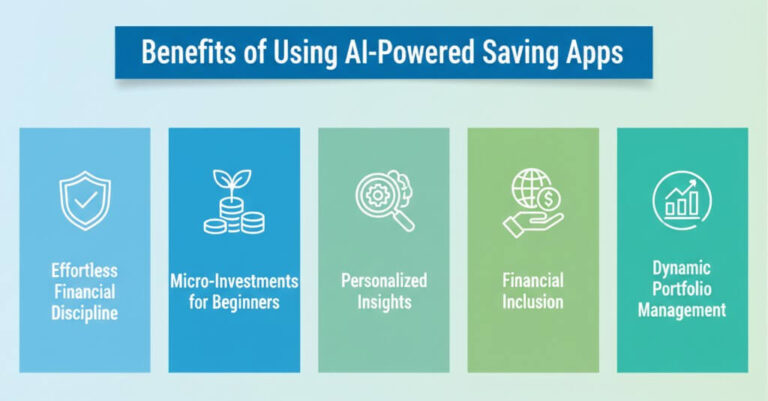
AI-powered saving apps have transformed how individuals approach personal finance by making disciplined saving and investing simpler, smarter, and more accessible. Through automation and intelligent data analysis, these platforms empower users to take control of their financial journey without requiring advanced expertise or constant monitoring. By combining behavioral insights, predictive algorithms, and real-time adaptability, AI saving apps not only simplify wealth management but also promote financial inclusion and literacy. Below are some of the key benefits that make these digital tools a powerful ally for modern investors and everyday savers alike.
Automated Savings Promote Disciplined Financial Habits Effortlessly
AI-powered saving applications foster consistent financial discipline by automatically allocating small, manageable amounts toward savings. This eliminates the need for constant decision-making or manual transfers, making the process seamless. Over time, automation instills a structured savings habit that supports long-term wealth creation.
Micro-Investments Lower Entry Barriers for Beginner Investors
These platforms allow users to begin investing with minimal amounts, thereby democratizing access to financial markets. Even spare change or small, variable savings can be directed into diversified investment options. This approach encourages novice investors to participate in wealth-building without feeling overwhelmed by high entry thresholds.
Personalized, Data-Driven Insights Optimize Wealth Growth
AI algorithms analyze user-specific income, expenses, and behavioral trends to design customized saving and investment strategies. The recommendations adapt dynamically to each individual’s risk tolerance and financial objectives. Such data-driven personalization enhances portfolio efficiency, maximizing long-term returns with balanced risk management.
Expanded Access to Financial Services Promotes Inclusion
AI-based saving tools extend financial accessibility to individuals previously excluded from formal investment systems. With simple onboarding, low minimum requirements, and smartphone integration, these apps make saving and investing universally attainable. This inclusivity contributes to greater financial awareness and strengthens India’s broader digital financial ecosystem.
Real-Time Portfolio Adjustments Enhance Returns and Manage Risk
AI engines continuously monitor market trends and user portfolios, automatically rebalancing allocations when needed. This real-time adjustment reduces exposure to volatility and captures emerging growth opportunities. By maintaining an optimal balance between risk and reward, users benefit from smoother, more consistent portfolio performance.
Potential Risks and Limitations
While AI-powered saving apps offer remarkable convenience and intelligent financial management, users should be aware that automation does not eliminate all risks. These platforms operate within dynamic market conditions and depend heavily on user data, predictive models, and external regulations. Understanding the potential drawbacks ensures users can make informed decisions, balance automation with personal oversight, and use these tools responsibly for sustainable financial growth.
Market Volatility Can Affect Investment Outcomes Despite AI Optimization
While AI algorithms analyze trends and adjust portfolios intelligently, they cannot eliminate market risks entirely. Sudden economic shifts, geopolitical events, or market corrections can still impact investment returns. Therefore, users should maintain realistic expectations and understand that all investments carry inherent risks, regardless of automation.
Data Privacy Breaches Remain a Concern if Not Managed Properly
AI-powered saving apps rely on access to sensitive financial data such as transaction histories and account details. If security protocols are inadequate, this information could be vulnerable to breaches or misuse. Choosing SEBI- or RBI-regulated platforms with strong encryption and data protection measures is essential for safeguarding personal information.
Users May Develop Over-Reliance, Neglecting Personal Financial Awareness
Automation can sometimes make users complacent about actively monitoring their finances. Over-reliance on AI recommendations might reduce awareness of spending habits and long-term goals. Maintaining a basic understanding of financial principles and periodically reviewing investments helps prevent dependency and promotes informed decision-making.
Fees and Exit Charges May Reduce Net Gains, Requiring Transparency
Some saving and investment apps include hidden service charges, management fees, or early withdrawal penalties. These costs, though small individually, can erode overall returns over time. Users should carefully review the fee structure and terms before committing funds to ensure full transparency and avoid unexpected deductions.
AI Models’ Predictions Are Probabilistic, Not Guarantees
AI algorithms operate on predictive analytics and probability models, which means outcomes are based on data trends—not certainties. Even the most advanced models can misinterpret anomalies or fail to predict sudden financial changes. Users should treat AI as a supportive tool rather than a definitive guide, balancing automation with personal judgment.
Precautions for Users
As AI-powered saving apps grow in popularity, users must exercise caution to ensure safe, transparent, and beneficial financial experiences. While these platforms automate savings and investments efficiently, responsible usage and basic digital awareness are essential to avoid risks related to data security, hidden costs, and unauthorized activities. The following precautions can help safeguard your money and personal information while enjoying the benefits of AI-driven finance.
Verify App Legitimacy by Checking SEBI and RBI Registrations
Before downloading or linking your bank account, confirm that the app is registered with regulatory bodies such as SEBI (for investment-related services) or RBI (for payment operations). Authentic apps disclose their registration numbers and compliance details transparently on official websites or within their documentation.
Avoid unregulated or newly launched platforms that lack verified credentials, as they may pose security or reliability risks.
Use Strong Device Security, Such as Biometrics and Updated Software
Ensure that your smartphone and banking apps are protected by biometric locks, two-factor authentication, and the latest OS updates. Regular software updates fix vulnerabilities that hackers could exploit to access sensitive financial data. Additionally, avoid using public Wi-Fi networks for financial transactions to minimize exposure to potential cyber threats.
Understand Fee Structures, Lock-in Periods, and Withdrawal Rules
Before committing funds, review all service charges, commissions, or early withdrawal penalties associated with the app. Transparent apps clearly outline their pricing models, helping users calculate net returns accurately. Knowing these terms beforehand prevents unpleasant surprises and allows users to make better financial decisions aligned with their goals.
Monitor Investment Performance and Savings Regularly
Even though AI handles most of the work, it’s essential to review your portfolio and savings progress periodically. Regular monitoring helps ensure that investments remain aligned with your financial objectives and risk appetite. Checking performance reports also helps detect anomalies, missed savings, or changes in app policies that may affect your returns.
Avoid Sharing Unnecessary Personal Data Beyond App Requirements
Provide only the information strictly required for KYC and compliance purposes—never share sensitive documents or passwords outside official channels. Be cautious of third-party links, emails, or in-app offers requesting extra permissions or financial details. Maintaining data discipline not only prevents misuse but also reinforces your control over your personal and financial identity online.
By following these simple yet vital precautions, users can enjoy the full advantages of AI-powered saving apps while minimizing security and financial risks
Eligibility & Getting Started
To begin using AI-powered saving apps in India, users must meet a few basic eligibility criteria and setup requirements that ensure smooth and secure operation
- Users must be Indian residents aged 18 or above and complete a valid Aadhaar-linked KYC process. This verification step confirms identity, prevents fraud, and ensures compliance with RBI and SEBI regulations. Completing KYC also helps unlock full access to investment features and faster transaction approvals within the app.
- A linked bank account and a smartphone with reliable internet access are essential for app functionality. The bank connection allows automatic transfers, real-time balance updates, and transaction tracking, while a stable internet connection ensures uninterrupted syncing of data and notifications. Together, these elements enable users to monitor and manage their savings and investments anytime, anywhere.
- Many AI-powered saving platforms set minimum saving or investment thresholds. These thresholds ensure operational efficiency and allow users to begin with small, comfortable amounts before scaling up. This flexibility makes AI-based investing accessible even to first-time users with limited disposable income.
- Finally, most apps provide seamless onboarding experiences through step-by-step guidance, intuitive dashboards, and interactive tutorials. New users are assisted throughout the setup process with automated verification, goal-based savings recommendations, and quick navigation support. In case of queries, responsive customer support—available through chat, email, or helplines—ensures users receive timely assistance, making the entire experience simple and beginner-friendly.
Popular AI Saving Apps in India
- Groww – https://groww.in
- Cube Wealth – https://cubewealth.com
- Wishfin – https://wishfin.com
- ET Money – https://etmoney.com
- Paytm Money – https://paytmmoney.com
Popular Global AI Saving Apps
- Chip (UK) – https://www.getchip.uk
- Cleo (Global) – https://web.meetcleo.com
- Acorns (USA) – https://www.acorns.com
- Qapital (USA) – https://www.qapital.com
- Plum (UK) – https://withplum.com
The above-mentioned apps serve as examples for reference. Users should explore further to identify platforms that align with their individual requirements and risk profiles.
Conclusion
AI-powered saving apps represent the next evolution in personal finance — blending automation, intelligence, and accessibility. They simplify the saving and investing process for millions of Indians, making wealth creation more inclusive and efficient.
While these tools offer immense convenience, users must remain informed, choose SEBI- and RBI-registered platforms, and actively monitor their progress. When used wisely, AI saving apps can turn small, variable savings into a powerful engine for long-term financial stability.
This post is shared to inspire curiosity and deepen understanding.

Pingback: From Saving to Everyday Investing: Building Wealth One Step at a Time
Pingback: All ideas having large consequences are always simple. - Infotidings
Pingback: Forests precede civilizations and deserts follow them. - Infotidings