
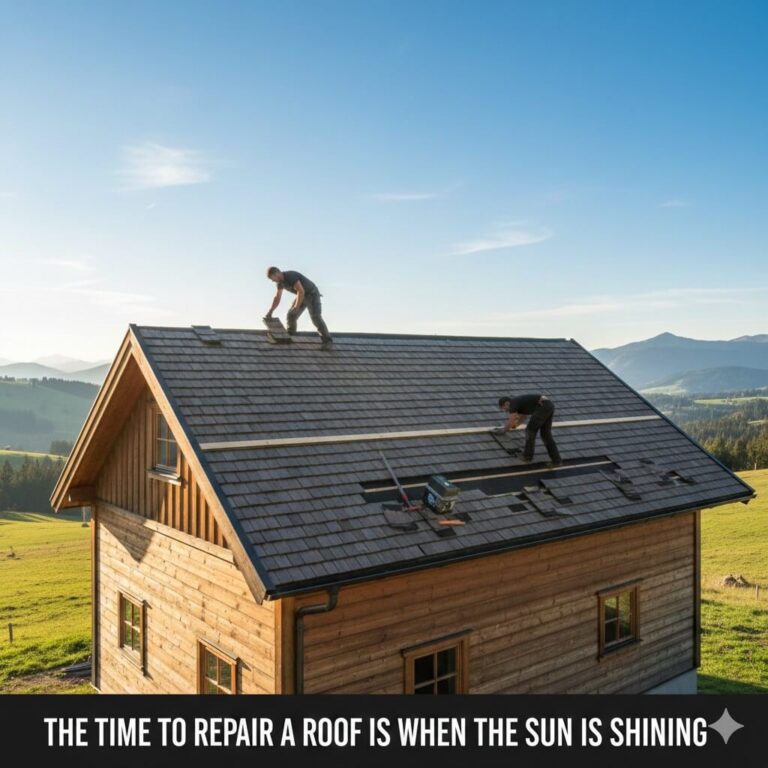
“The time to repair a roof is when the sun is shining” is a simple proverb with a message that touches every part of life. A roof can be repaired easily on a bright day, but once the rain comes, even a tiny leak becomes impossible to manage. The same pattern appears in human life. When things are going well, we often relax, delay tasks, and ignore small cracks in our routines. It is only when difficulties arrive that we realize how much easier things would have been if we had acted earlier. The proverb reminds us that preparation during peaceful times is what protects us during storms.
This message first shows its importance in our personal habits and everyday routines. People naturally postpone tasks when there is no pressure. A student may delay studying because exams feel far away. Someone may ignore a cluttered room, a small repair at home, or an unpaid bill because nothing seems urgent. But these “small things” grow quietly. A messy space becomes stressful, a simple repair becomes costly, and a delayed responsibility turns into a last-minute panic. When life is calm and the sun is metaphorically shining, those are the most suitable times to set things right—clean a little, organize a little, complete tasks piece by piece. These tiny acts of maintenance strengthen the foundation of our daily life.
Relationships also function like roofs. A small misunderstanding, if ignored, begins to widen. Minor hurt feelings, unspoken worries, or growing distance do not fix themselves on their own. It is much easier to communicate, listen, and resolve issues when emotions are steady and the situation is calm. Waiting until there is a heated conflict is like trying to fix a leaking roof in the middle of a storm. The repair becomes harder, and damage spreads faster. Investing time in loved ones, showing appreciation, expressing gratitude, and addressing concerns early makes relationships strong enough to survive difficult times. Peaceful moments are opportunities to deepen trust.
Financial stability is another area where early preparation matters greatly. When income is steady and life feels comfortable, it is tempting to spend freely or assume that money will always flow the same way. But life rarely stays predictable. Unexpected medical bills, job losses, emergencies, or economic changes can appear suddenly. Saving during good times creates a safety net that protects during difficult times. An emergency fund, even a small one, prevents panic later. Planning expenses, avoiding unnecessary debt, and investing wisely are all forms of early preparation. Many financial crises become overwhelming not because resources were lacking, but because precautions were ignored. Repairing the financial “roof” early brings peace and confidence.
Health follows the same rule. When the body feels strong, it is easy to ignore healthy habits and assume that wellness will continue naturally. But health problems often begin silently, like tiny cracks in a roof. Irregular sleep, careless eating, prolonged stress, or a lack of exercise gradually weaken the body. By the time we notice symptoms, the damage may be harder to reverse. Taking care of health when everything feels fine is the wisest choice. Simple habits—regular check-ups, balanced meals, physical activity, and mental rest—act as early repairs that protect us in the long run. A strong, well-maintained body handles pressure and illness far better than one that is neglected.
The idea applies equally to career and skill development. When someone feels secure at work, it may not seem necessary to learn something new or upgrade their abilities. But industries evolve, technology changes, and job roles shift. People who grow during stable times remain relevant during uncertain times. Reading, attending workshops, updating skills, learning digital tools, or expanding professional networks are forms of preparation that keep careers strong. Those who wait until they face job loss or role changes find the “roof” much harder to repair. A career built on continuous learning stands firm during storms.
Businesses too are guided by this principle. A successful company does not wait for a crisis to improve itself. When profits are good, that is the time to strengthen systems, train employees, upgrade technology, and diversify products. Companies that maintain quality and invest in growth during peaceful years stand strong when economic challenges arise. On the other hand, businesses that ignore early warning signs often struggle to survive during downturns. Decisions made in crisis mode are rushed and costly. But decisions made during stable periods are thoughtful and effective. A business that repairs its roof while the sun shines earns long-term stability.
Communities also benefit from early planning. A neighborhood that takes care of waste management, public safety, clean surroundings, and shared resources during normal times faces fewer problems later. Community awareness programs, disaster-preparedness training, and quick-response systems help people stay safe during emergencies. Small actions like planting trees, maintaining public spaces, and supporting local initiatives collectively strengthen the social environment. When everyone contributes during peaceful times, the community becomes more resilient.
On an even larger scale, nations thrive when they invest in the future before problems arise. Strong healthcare systems must be built before a pandemic hits, not after. Roads, bridges, and public infrastructure should be maintained before they crumble. Environmental protection must begin long before pollution becomes irreversible. Countries that save during financial growth periods are better prepared for economic slowdowns. Governments that invest in education, research, and innovation during stable times create a strong foundation for future generations. When the national “roof” is strengthened in good weather, the whole population benefits during storms.
Across all these layers—personal habits, relationships, finances, health, work, business, community, and country—the message is the same. Good times are not just for enjoyment; they are also opportunities for preparation. Sunshine is pleasant, but it also brings responsibility. It offers the right conditions to repair weaknesses, build strength, and prepare for the unpredictable future.
In the end, the wisdom of this proverb lies in its simplicity. It teaches that the best way to handle tomorrow’s problems is to act today. It encourages us to notice small cracks before they become large gaps. It reminds us that life will always have storms, but storms are far less frightening when we are prepared. When we repair our roof while the sun is shining, we build a life that can withstand anything. This simple habit of foresight becomes a powerful shield, protecting us again and again as we move through the changing seasons of life.