
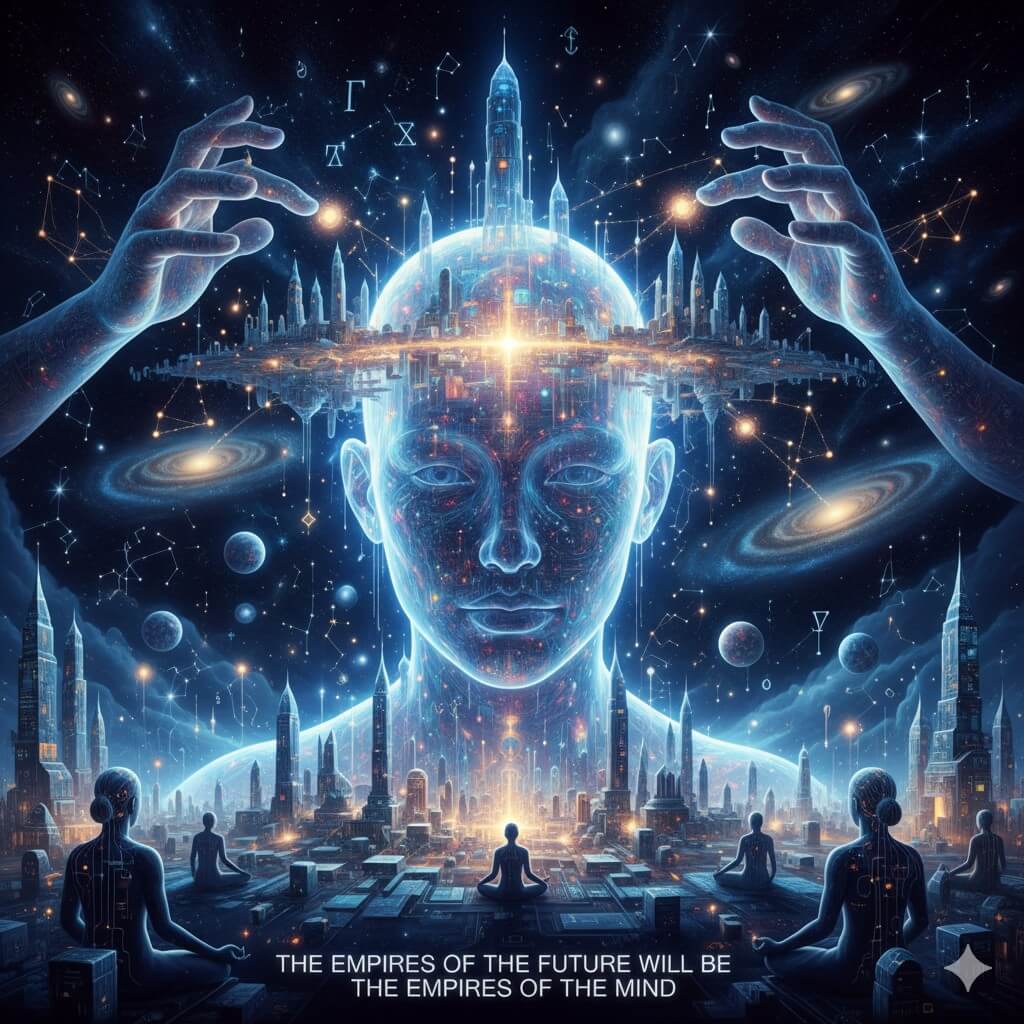
The saying “The empires of the future will be the empires of the mind,” spoken by Winston Churchill many years ago, feels more true today than ever. In earlier times, empires were built by conquering land, raising large armies, and controlling resources like gold, spices, or oil. Powerful nations fought wars to expand their borders and show dominance. But Churchill sensed a different kind of power rising. He believed that real strength would soon come from ideas, imagination, and knowledge. And in today’s world—where everyone has a smartphone and the internet connects billions—this idea feels completely accurate. Countries are no longer judged by how much territory they capture but by how much creativity and innovation they generate.
This shift is happening all around us. Nations now compete not with weapons but with inventions, discoveries, and breakthroughs. The winners are the ones who build smarter apps, create life-saving medicines, or develop technologies that transform daily life. Knowledge spreads at lightning speed because of online learning and global collaboration. Industries that once focused on physical goods now invest heavily in software, artificial intelligence, and data. Even individuals can rise to great heights if they master skills like coding, communication, and problem-solving. Compared to this, old forms of power look outdated—like riding a horse in a world of high-speed cars. Today, it’s bright minds that create long-lasting value, bring people together, and solve real problems.
India reflects this idea beautifully. Our country has always respected knowledge—from ancient institutions like Nalanda to the buzzing tech hubs of Bengaluru. Look at India’s space program. With far fewer resources than richer nations, ISRO managed to land Chandrayaan-3 near the moon’s south pole in 2023—an achievement no other nation had accomplished before. This wasn’t about military might. It was a triumph of planning, innovation, and pure brainpower. Indian scientists achieved world-class results using homegrown technology and cost-effective methods. That success didn’t just earn global admiration; it opened new avenues for international partnerships and created opportunities for India’s youth in space science and engineering.
India’s IT revolution tells a similar story. Cities like Hyderabad, Pune, and Gurugram are alive with software companies, startups, and research centers. Young people from tier-2 and tier-3 towns design apps used by millions across the world. Companies such as Infosys, TCS, and countless fintech startups lead global digital transformation. Government initiatives like Skill India equip millions with modern skills, turning ordinary minds into engines of progress. Even India’s culture—Bollywood, yoga, Ayurveda, cuisine—spreads ideas that bring people together. These are not physical conquests; they are intellectual and cultural waves that enhance India’s soft power. Yes, challenges like brain drain exist, but many Indians return with global experience, creating startups and generating jobs. India shows that when the mind leads, limitations fall away.
On the global stage, Silicon Valley is the perfect example of a modern “empire of the mind.” It is not a country, yet its influence reaches every corner of the world. Companies like Google and Apple began in small garages but today shape how we search, communicate, learn, and imagine. Google organizes the world’s information, giving it incredible influence. Apple transformed the smartphone industry, blending technology with design to redefine modern life. These companies thrive not because of land or armies but because they attract brilliant minds, encourage bold ideas, and invest heavily in research. Their power lies in innovation, algorithms, patents, and trust. Entire nations rely on their tools and systems for development. This model has inspired other innovation hubs such as Shenzhen in China and tech corridors across Europe.
But building such empires of thought is not simple. It requires strong education systems that offer quality learning to every child, not just the privileged. Governments must fund research while allowing freedom for creativity. People must stay curious and continue learning as the world evolves with technology, especially AI. Ethical responsibility becomes crucial—knowledge must uplift society, not harm it. Misusing technology can spread misinformation or violate privacy. True power lies in using ideas with wisdom, compassion, and fairness.
As we look ahead, the idea of mind-based empires fills us with hope. It creates a world where anyone with curiosity and courage can rise, regardless of background. You don’t need royal heritage, physical strength, or great wealth. A sharp mind, a big dream, and steady effort are enough. Imagine villages producing young coders who solve real problems, or storytellers creating art that brings people closer. Education becomes the bridge that turns ordinary individuals into extraordinary change-makers.
India’s journey reflects this vision. From a nation once struggling with poverty to a global leader in space, tech, and pharmaceuticals, India proves that intellectual strength can transform destiny. Expanding this progress means empowering rural schools, offering free digital learning, and celebrating scientists, teachers, and innovators. Globally, sharing knowledge—through open-source platforms or scientific collaborations—builds trust and unity. Whether it’s climate change, global health, or clean energy, cooperation beats rivalry.
And the beauty of this future is that it is inclusive. Women and marginalized groups—once pushed back—are now leading in science, business, and technology. Diverse teams spark better ideas because they bring many perspectives. This new world values empathy as much as intelligence. Inequality still exists, but united minds can create policies, tools, and systems that uplift everyone.
Picture the world of tomorrow: cities full of innovators, elders passing wisdom to youth, borders becoming less rigid as people share knowledge freely. We will solve pandemics faster, explore space together, protect our planet, and live more sustainably. Every mind matters; every idea adds light.
In closing, Churchill’s words remind us to treat ideas like precious treasures. They call us to keep learning, keep imagining, and keep growing. They urge us to believe that even the smallest thought can spark great change. They teach us that kindness and intelligence together create real strength. They inspire us to dream boldly and act with purpose. And most of all, they show that every one of us can help build this new world. The future belongs to minds that dare—and the power to shape it lies within us all.